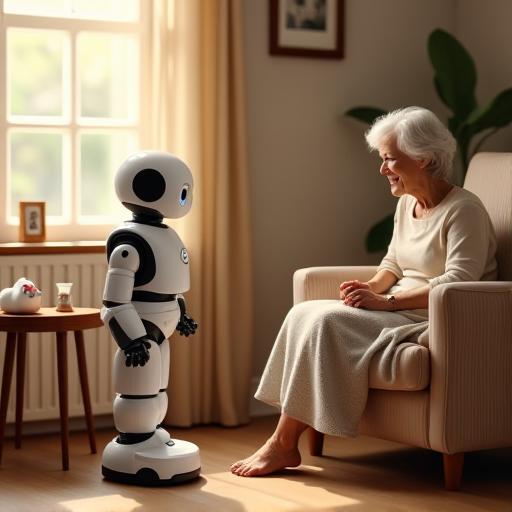
— The Growing Role of Robotic Companions and Conversational Systems for Senior Emotional Wellbeing in 2026
A.I. Summary (100-150 words)
The eldercare robot market reached $3.56 billion in 2026, growing at 12.5% CAGR, with both social companion robots and AI conversational systems becoming increasingly sophisticated in addressing loneliness, cognitive decline, and daily engagement for aging adults. Deployed robots include Paro (therapeutic seal robot used globally since 2003), Hyodol (ChatGPT-powered companion doll with 12,000+ deployments in South Korea), ElliQ (proactive AI companion widely deployed in New York senior communities), and new entrants like Abi (Australia’s Andromeda Robotics, raised $17M to deploy in US seniors care facilities starting 2026) and Fourier GR-3 Care-bot. The global dementia caregiving crisis — with 63 million unpaid family caregivers including 12 million specific to Alzheimer’s-related dementia — creates enormous demand for AI solutions that supplement human support. At COMPUTEX 2026, Nuwa Robotics demonstrated robots with expressive facial interaction and cognitive health tracking capabilities designed specifically to reduce technology resistance among seniors.
O.A. Summary (2–4 paragraphs)
Loneliness among older adults is now recognized by the WHO as a critical public health threat — social isolation increases the risk of dementia by 50%, heart disease by 30%, and stroke by 32%. The eldercare robot industry emerged directly in response to this crisis, and 2025-2026 has seen it evolve from experimental prototypes into deployed commercial products with measurable outcomes. Several distinct product categories now exist: therapeutic robots (like Paro, the seal-shaped robot that responds to touch, voice, and movement with lifelike behaviors), proactive AI companions (ElliQ initiates conversations and activities without being asked), humanoid care assistants (Abi, GR-3 Care-bot provide both social interaction and practical aid like medication reminders), and emotional-support doll systems (Hyodol in South Korea).
The most significant development this year is the integration of advanced conversational AI (particularly ChatGPT-class models) into physical robot platforms. Hyodol’s 12,000+ deployments in South Korea represent the largest-scale test of this approach: a humanoid companion that can hold extended conversations about current events, personal history, and emotional topics rather than relying on scripted interactions. Abi, recently funded with $17M from Andromeda Robotics, is being deployed in American senior care facilities using similar conversational AI — but designed specifically for the US market’s cultural context. What makes these meaningful is not just conversation capability but the robots’ ability to learn individual preferences over time: noting birthdays, remembering stories told during previous interactions, suggesting activities based on mood, and alerting human caregivers when interaction patterns change significantly (often an early indicator of depression or decline).
The emotional connection seniors form with companion robots has raised important questions about ethics and authenticity that the industry is still grappling with. When a robot says “I care about you,” is that comforting companionship or exploitation of cognitive vulnerability? Researchers who study these systems consistently find that elderly users benefit emotionally from their relationships with companion robots — often regardless of whether they fully understand the technology behind it. The ethical question may not be about transparency per se, but about whether we are creating better alternatives to the alternative: profound loneliness when human caregivers and family members simply cannot be present 24/7.
Why This Matters
For seniors living alone — whether by choice or because their communities have shrunk through death, distance, or mobility limitations — companion robots represent a genuine new option between total isolation and institutional care. They can detect falls, remind about medications, initiate conversation when someone hasn’t spoken in hours, and monitor behavioral changes that might indicate depression or early cognitive decline. For families of seniors who live far away, these systems provide both peace of mind and concrete data about their loved one’s wellbeing during the hours between scheduled check-in calls. The dementia caregiving crisis is particularly acute: with 63 million US caregivers already stretched thin, even modestly effective AI support tools can dramatically reduce caregiver burnout — which ultimately benefits patients who receive more consistent, patient care when their human supporters have sustainable breaks.
Key Takeaways
- Eldercare robot market: $3.56B (2026) → projected $10B+ by 2035 at 12.5% CAGR
- Deployed companion robots include Paro (global), Hyodol with ChatGPT AI (12,000+ deployments SK), ElliQ (NY senior communities)
- Abi robot from Andromeda Robotics ($17M raised) launching in US senior care facilities; Fourier GR-3 Care-bot for home assistance
- 63 million unpaid family caregivers in the US provide care to seniors, 12 million specifically for dementia patients — creating massive demand
- Robots are evolving beyond scripted interaction to adaptive systems that learn individual preferences and detect behavioral change patterns
Pros
- Measurable reduction in loneliness, depression symptoms, and anxiety among seniors using companion robots (documented across multiple deployment studies)
- Caregiver burden relief is tangible: 12 million dementia caregivers face extreme burnout; AI companions provide 24/7 supplementary support
- Conversational AI integration makes newer robots genuinely engaging rather than the novelty that limited earlier generations
- Early-detection capability through pattern monitoring could trigger medical intervention before a crisis occurs
- Growing market means rapid innovation, falling prices, and increasing feature competition
Cons
- Robot companions cannot replace human connection — they may reduce loneliness but cannot fulfill its deepest needs for authentic reciprocity
- High cost: most companion robots cost $3,000-$10,000+, largely uninsured and out of reach for fixed-income seniors
- Privacy risks are significant: robots with cameras, microphones, and conversation AI continuously collect sensitive personal and health data
- Cultural differences in robot acceptance vary widely — products designed for Japan or South Korea may not resonate with Western senior populations
- Dependence on a robot companion may reduce motivation to seek human interaction, potentially creating new forms of isolation
Research Rating: 2/8
Strong coverage of the commercial landscape (specific deployed systems, funding amounts, deployment numbers), good balance of benefits and ethical concerns. The industry data is concrete and specific. However, peer-reviewed clinical studies on long-term outcomes are still relatively scarce — much of the available evidence comes from vendor-sponsored research where independent validation would strengthen the picture significantly.
Sources
- RoboZaps: Humanoid Robots in Elderly Care 2026 — $3.56B market size, deployed robots (Paro, Hyodol, ElliQ, Abi), $17M Andromeda funding coverage
- COMPUTEX 2026: AI Companion Robots & Smart Elderly Care — Nuwa Robotics demonstration with expressive emotional interaction and cognitive health tracking
- Washington Post: Meet Abi, the AI-powered robot companion for senior care — Australian-designed Abi launching in American senior care facilities
- CEDIA: Robotic Companions Redefining Aging in Place — Smart home integration, emotional recognition capabilities, adaptive learning for eldercare robots
- Robotomated: Best Eldercare Robots 2026 — Comparative review of companion and care robots including Furhat, MORA rehabilitation, and senior activity monitors
Suggested Related Topics
- AI Training Programs for Older Adults Digital Literacy
- AI-Powered Fall Detection and Home Safety Systems for Elderly
- Mental Health and Loneliness Prevention Through AI Companionship Interventions
- Voice Assistants and Natural Language AI in Everyday Senior Living
- Caregiver Support Technologies and Respite AI Tools for Family Caregivers