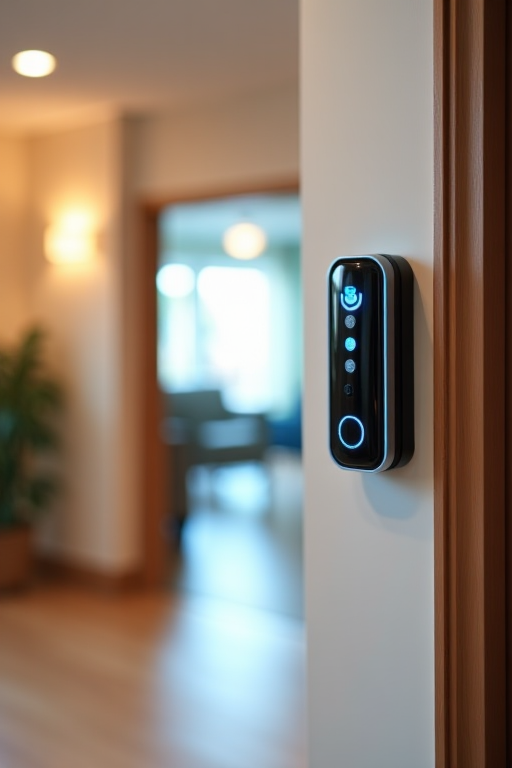
AI Ambient Fall Detection: How Inspiren’s Physical AI is Reshaping Senior Living Safety
The $70M Series C company achieving a 48% fall reduction is proving that privacy-first AI can make senior living safer, not more surveilled.
Summary
Inspiren, a company that uses privacy-first ambient sensors rather than cameras to monitor senior living residents, raised $70 million in Series C funding at a valuation over $500 million. Its AI system has been shown to reduce falls by 48%, post-fall ER visits by 73%, and hospitalizations by 54% across partner facilities — a result that simultaneously improves clinical outcomes and community economics.
Overview
One in four older adults falls each year, and falls are the leading cause of injury-related death among older Americans. In senior living, a fall can mean a broken hip, a traumatic brain injury, or the end of independence. Most incidents in a resident’s room happen when no one is there to see them — closed doors protect privacy but create blind spots.
Inspiren’s solution uses “Physical AI” — ambient sensors that detect changes in movement patterns without cameras. The system learns each resident’s baseline behavior and alerts care teams when something deviates: a sudden stillness after rapid movement, unusual nighttime activity, altered gait.
On September 10, 2026, Inspiren announced a $70 million Series C funding round at a valuation exceeding $500 million, led by NewView Capital — bringing total capital raised to $225 million. The company now operates at communities associated with more than 80% of the largest senior housing investors in the U.S.
Why This Matters to Older Adults
- Falls are the leading injury-related cause of death for seniors. A single fall can trigger a chain of decline — hospitalization, loss of independence, cognitive decline — that is rarely reversible.
- Current solutions are inadequate. Many seniors forget to wear fall-detection pendants. Cameras are invasive and raise dignity concerns. Inspiren’s approach requires no wearable and no cameras.
- The data is real and sustained. The 48% fall reduction at Solera’s Las Vegas facility was measured over 10 months of continuous operation. Post-fall ER visits dropped 73%.
- Families benefit too. The eCall two-way voice feature can alert family members, providing peace of mind without compromising independence.
The Problem Inspiren Solves
A resident’s room is their private space — but closed doors create blind spots for care teams. By the time a caregiver notices something is wrong after a fall, the window for preventing serious injury has often closed.
Inspiren’s founder, Michael Wang (a former Green Beret and cardiothoracic nurse), asked: “A decade from now, will any senior facility accept that a resident’s needs could go unknown behind a closed door?”
What “Physical AI” Means
Inspiren’s sensors do not capture visual imagery. Instead, they detect patterns — a sudden change in movement, unusual stillness — and cross-reference against each resident’s behavioral baselines. The system detects deviations: increased nighttime bathroom trips, altered gait, reduced social engagement — early indicators of infection, medication issues, or cognitive decline.
The Results
Aegis Living reported residents who opted into Inspiren stayed 34% longer, with fall rates dropping 22% and injury rates declining 24%.
Clearwater Living saw post-fall ER visits drop 73% within three months in its memory support communities.
Solera Senior Living’s 10-month study showed a 48% reduction in total falls, 54% fewer hospitalizations, and 50% faster staff response times.
The Technology Ecosystem
Inspiren’s platform goes beyond fall detection. Its eCall system recently received an upgrade with Two-Way Voice and Alert Claiming features, so care teams receive audio from the room. The company also provides care utilization analytics to help administrators optimize staffing.
Why Now
The 85-and-older population is the fastest-growing age group in North America. The senior care workforce shortage means technology that amplifies caregivers’ situational awareness makes a meaningful difference. Ambient sensing has matured to the point where privacy-first monitoring is feasible and reliable.
Key Takeaways
- Inspiren’s ambient sensors reduced falls by 48%, post-fall ER visits by 73%, and hospitalizations by 54% over a 10-month study.
- The company raised $70 million Series C at a $500M+ valuation, bringing total funding to $225 million.
- Aegis Living residents who opted in stayed 34% longer, and injury rates dropped 24%.
- Inspiren’s system is privacy-first: it uses motion and behavioral-pattern sensors, not cameras.
Practical Considerations
- Privacy: The sensors do not capture video, addressing the biggest concern families have about monitored senior living.
- Scalability: No wearable devices are required, meaning even residents who forget to charge a pendant are protected.
- Broader value: The same sensors detect early signs of infection, medication non-compliance, and cognitive decline — providing value beyond fall safety.
Sources with URLs
- Inspiren Raises $70M Series C to Scale Physical AI for Senior Living — The AI Insider, September 14, 2026
- Inspiren Raises $70 Million To Expand AI-Powered Senior Living Platform — Crowdfund Insider, September 14, 2026
- Inspiren Secures $70M to Scale Physical AI Across Senior Living — HitConsultant, September 15, 2026
- Inspiren Secures $70M to Advance Physical AI in Senior Care — InforCapital, September 14, 2026
Inspiren, AI ambient fall detection, senior living, Physical AI