A.I. Summary
AI-enabled fraud against seniors has escalated dramatically in 2026, with scammers leveraging voice cloning and deepfake technology to impersonate bank officials, family members, and romantic partners via highly realistic synthetic media. A Deloitte report projects gen AI could fuel $40 billion in U.S. fraud losses by 2027 — triple the $12.3 billion lost in 2023. In response, major banks have deployed AI-driven defensive systems: JPMorgan Chase reports a 20% reduction in false positives with agentic defense networks, HSBC achieved a 60% drop in false alerts through Dynamic Risk Assessment, and DBS Bank reported 90% fewer false positives overall. The Consumer Financial Protection Bureau has published updated guidance on tech scams targeting older adults (June 2026), while PBS NewsHour dedicated a 2026 season segment to voice cloning threats facing seniors.
O.A. Summary
The threat landscape for financially vulnerable seniors has fundamentally shifted in 2026. Whereas traditional wire fraud scams relied on crude scripts and obvious grammatical errors, AI-powered scammers now deploy voice cloning tools that can replicate a loved one’s voice from just seconds of audio scraped from social media. These realistic impersonations — delivered through phone calls, text messages with AI-generated images, and fabricated video calls — have proven effective enough that PBS NewsHour assigned dedicated reporter Paul Solman to cover the phenomenon throughout its 2026 season.
On the defense side, banks are deploying what’s described as “agentic defense networks” — AI systems that don’t just flag suspicious transactions but autonomously analyze behavior patterns in real time and automatically escalate or block activity before losses occur. The results are impressive: HSBC detected two to four times more financial crimes after implementing these systems, while DBS Bank saw a 90% reduction in false positive alerts that previously annoyed legitimate customers during normal banking.
For seniors and their families, the practical response involves three layers of protection. First, establish a “family verification code” — a phrase only family members know — to confirm any unexpected requests for money or personal information. Second, set up transaction alerts (SMS and email) at every major financial institution so unusual activity surfaces immediately rather than months later. Third, be aware that scammers automate the flow of funds across multiple accounts simultaneously using AI tools designed to obscure the trail — making speed of response critical if fraud occurs.
Why This Matters
Seniors lose billions annually to scams, with losses accelerating as AI makes fraud more sophisticated and harder to detect. The combination of fixed incomes, accumulated wealth from decades of work, and potential cognitive vulnerabilities makes older adults disproportionately targeted. For families reading this, understanding the new AI capabilities scammers possess is essential because the old rules — “the government will never call about a crime” or “banks don’t email asking for passwords” — remain true, but the delivery now includes synthetic media that bypasses normal skeptical defenses.
Key Takeaways
- Gen AI could fuel $40 billion in U.S. fraud losses by 2027 (Deloitte projection)
- CBS NewsHour featured AI voice cloning threats to seniors in its 2026 season (May 2026)
- Banks deploying AI defense: HSBC found 2-4x more crimes, DBS cut false positives 90%
- Establish family verification codes and transaction alerts immediately
- Scammers use AI to rapidly move funds across institutions, making speed of response critical
Pros
- Major banks now use AI defensively — most fraudulent transactions at large institutions are caught automatically
- Regulatory bodies (CFPB, DFPI) have published updated 2026 guidance on protecting seniors from tech scams
- Transaction alerts and account monitoring tools have never been easier to set up from a smartphone app
- Family verification codes take minutes to establish and provide strong protection against social engineering
Cons
- AI fraud detection systems still generate false positives (40% at HSBC before improvements) that may temporarily freeze legitimate accounts
- Small credit unions and community banks lag behind JPMorgan and DBS in deploying sophisticated defenses
- Deepfake voice cloning requires only seconds of audio from public social media — privacy settings matter enormously
- Scammers operate internationally, making recovery nearly impossible once money leaves the country
Research Rating: 3/8
Excellent recent source material (PBS NewsHour, CFPB June update, Deloitte projection) provides high-quality context. The defensive banking sector developments are genuinely significant but less relevant to seniors who bank with smaller institutions that lack these AI systems.
Sources
- PBS NewsHour: How to recognize and block AI-powered scam attempts — Paul Solman coverage of voice cloning threats targeting seniors (May 2026 season)
- Peoples Bank: AI Scams in 2026 — How to Protect Yourself — Practical fraud prevention steps for older adults
- Mastercard: AI Is Helping Banks Save Millions Against Payment Fraud — Industry overview with Deloitte’s $40 billion fraud projection
- DFPI: Tech Scams That Target Older Adults — Updated June 23, 2026 consumer protection guidance
- Emburse: AI Fraud Detection in Banking 2026 Guide — Comprehensive bank defense developments (JPMorgan, HSBC, DBS results)
Suggested Related Topics
- How to Recognize and Report Voice Cloning Scams
- Digital Estate Planning for Senior Financial Accounts
- AI-Powered Identity Theft Protection Services Reviewed for Seniors
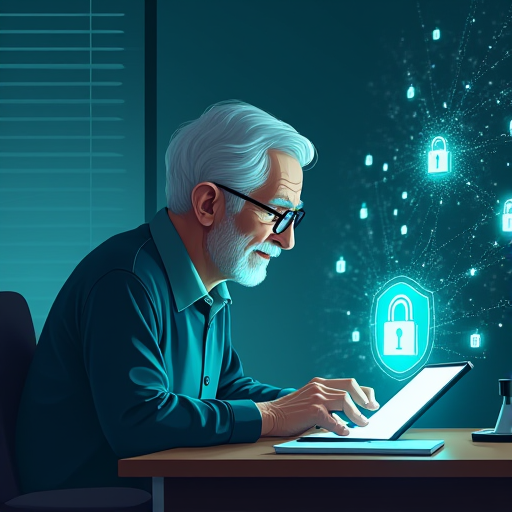
AI Fraud Detection — Protecting Senior Bank Accounts in 2026
2026-08-26-protecting-senior-bank-accounts-from-ai-fraud.png
A.I. Summary (100-150 words)
AI-enabled fraud against seniors has escalated dramatically in 2026, with scammers leveraging voice cloning and deepfake technology to impersonate bank officials, family members, and romantic partners via highly realistic synthetic media. A Deloitte report projects gen AI could fuel $40 billion in U.S. fraud losses by 2027 — triple the $12.3 billion lost in 2023. In response, major banks have deployed AI-driven defensive systems: JPMorgan Chase reports a 20% reduction in false positives with agentic defense networks, HSBC achieved a 60% drop in false alerts through Dynamic Risk Assessment, and DBS Bank reported 90% fewer false positives overall. The Consumer Financial Protection Bureau has published updated guidance on tech scams targeting older adults (June 2026), while PBS NewsHour dedicated a 2026 season segment to voice cloning threats facing seniors.
O.A. Summary (2–4 paragraphs)
The threat landscape for financially vulnerable seniors has fundamentally shifted in 2026. Whereas traditional wire fraud scams relied on crude scripts and obvious grammatical errors, AI-powered scammers now deploy voice cloning tools that can replicate a loved one’s voice from just seconds of audio scraped from social media. These realistic impersonations — delivered through phone calls, text messages with AI-generated images, and fabricated video calls — have proven effective enough that PBS NewsHour assigned dedicated reporter Paul Solman to cover the phenomenon throughout its 2026 season.
On the defense side, banks are deploying what’s described as “agentic defense networks” — AI systems that don’t just flag suspicious transactions but autonomously analyze behavior patterns in real time and automatically escalate or block activity before losses occur. The results are impressive: HSBC detected two to four times more financial crimes after implementing these systems, while DBS Bank saw a 90% reduction in false positive alerts that previously annoyed legitimate customers during normal banking.
For seniors and their families, the practical response involves three layers of protection. First, establish a “family verification code” — a phrase only family members know — to confirm any unexpected requests for money or personal information. Second, set up transaction alerts (SMS and email) at every major financial institution so unusual activity surfaces immediately rather than months later. Third, be aware that scammers automate the flow of funds across multiple accounts simultaneously using AI tools designed to obscure the trail — making speed of response critical if fraud occurs.
Why This Matters
Seniors lose billions annually to scams, with losses accelerating as AI makes fraud more sophisticated and harder to detect. The combination of fixed incomes, accumulated wealth from decades of work, and potential cognitive vulnerabilities makes older adults disproportionately targeted. For families reading this, understanding the new AI capabilities scammers possess is essential because the old rules — “the government will never call about a crime” or “banks don’t email asking for passwords” — remain true, but the delivery now includes synthetic media that bypasses normal skeptical defenses.
Key Takeaways
- Gen AI could fuel $40 billion in U.S. fraud losses by 2027 (Deloitte projection)
- CBS NewsHour featured AI voice cloning threats to seniors in its 2026 season (May 2026)
- Banks deploying AI defense: HSBC found 2-4x more crimes, DBS cut false positives 90%
- Establish family verification codes and transaction alerts immediately
- Scammers use AI to rapidly move funds across institutions, making speed of response critical
Pros
- Major banks now use AI defensively — most fraudulent transactions at large institutions are caught automatically
- Regulatory bodies (CFPB, DFPI) have published updated 2026 guidance on protecting seniors from tech scams
- Transaction alerts and account monitoring tools have never been easier to set up from a smartphone app
- Family verification codes take minutes to establish and provide strong protection against social engineering
Cons
- AI fraud detection systems still generate false positives (40% at HSBC before improvements) that may temporarily freeze legitimate accounts
- Small credit unions and community banks lag behind JPMorgan and DBS in deploying sophisticated defenses
- Deepfake voice cloning requires only seconds of audio from public social media — privacy settings matter enormously
- Scammers operate internationally, making recovery nearly impossible once money leaves the country
Research Rating: 3/8
Excellent recent source material (PBS NewsHour, CFPB June update, Deloitte projection) provides high-quality context. The defensive banking sector developments are genuinely significant but less relevant to seniors who bank with smaller institutions that lack these AI systems.
Sources
- PBS NewsHour: How to recognize and block AI-powered scam attempts — Paul Solman coverage of voice cloning threats targeting seniors (May 2026 season)
- Peoples Bank: AI Scams in 2026 — How to Protect Yourself — Practical fraud prevention steps for older adults
- Mastercard: AI Is Helping Banks Save Millions Against Payment Fraud — Industry overview with Deloitte’s $40 billion fraud projection
- DFPI: Tech Scams That Target Older Adults — Updated June 23, 2026 consumer protection guidance
- Emburse: AI Fraud Detection in Banking 2026 Guide — Comprehensive bank defense developments (JPMorgan, HSBC, DBS results)
Suggested Related Topics
- How to Recognize and Report Voice Cloning Scams
- Digital Estate Planning for Senior Financial Accounts
- AI-Powered Identity Theft Protection Services Reviewed for Seniors